How to Write
a Dating Profile
That Actually Gets Responses
Stop overthinking your bio! Discover the best dating profile tips, bio ideas for women over 50, and how to write a dating profile that creates a real connection.

Most people stare at the "About Me" box for twenty minutes, type three sentences, delete them, and start over. That experience is more common than anyone would admit, and the problem usually doesn't lie in not having anything to say.
The problem is the framing: a dating profile isn't a résumé or a performance review, or a list of credentials designed to impress the widest possible audience. A good profile should do one specific thing: make the right person feel like they already know you a little and want to know more.
Think of it as a bridge: on one side is a stranger scrolling through faces and names. On the other side is you, with a full life, a sense of humor, a way of spending Sunday mornings, a film you've watched four times. A strong online dating profile is the thing that gets them from one side to the other.
This guide covers exactly how to build that bridge from dating profile tips and bio ideas to the mistakes that quietly kill response rates.

Dating profile ideas and bios that work
The 3-2-1 method
- 3 things you genuinely love. Be specific. "I love travel" is too broad and doesn't make you stand out. Try "I've been to eleven countries and still think Portugal wins.". This would spark an actual conversation with someone. A detail sticks when it is specific.
- 2 things you're looking for. It could be something like "I'm looking for someone who still gets excited about discovering a new restaurant". It's distinctive and warm.
- 1 fun fact – something slightly unexpected. The detail that makes someone think "I want to ask about that."
That's what a good dating profile bio actually is: it's an entry point for someone else to get to know you.
Profile ideas for different personalities
There's no single template for creating a good online dating profile, and what works depends on who you actually are.
The Adventurer
If your life involves regular travel, outdoor activity, or trying new things, lead with that energy. Mention a specific place or experience. "I spent three weeks in Oaxaca last year, and I'm still thinking about it" lands better than "I love to travel."The Creative
This includes writers, painters, musicians, gardeners, cooks and overall imaginative people. If you make things or spend serious time with creative hobbies, your profile should feel like it came from that part of you. Reference a particular type of work or craft. It's more compelling to show a piece of your creative nature than state it.The Homebody
There's nothing wrong with preferring a good book and a quiet evening, but the mistake is writing it in an apologetic tone. "I'm a bit of a homebody" sounds like a confession, while "I've read everything Donna Tartt has published and I'm working through Hilary Mantel" sounds like someone worth talking to.
A profile example for Sequel
Here's what a good dating profile looks like in practice for someone using Sequel, a dating app built for the 50+ community that puts real conversation at the center of the experience:
"Retired architect, still obsessed with how spaces make people feel. I spend weekends at farmers markets, cooking things that take too long and arguing about whether the 1970s were actually the best decade for film. Looking for someone who brings real curiosity to the table and is excited to see what comes next."
That bio tells you what this person does, how they think and what they care about, along with the things they're looking for. It invites a response because it gives you something to respond to.
Using dating profile questions to spark conversation
Most dating platforms include built-in prompts. They are short questions you answer to add texture to your profile. These are one of the most underused tools in making a dating profile, and they're especially useful for people who find the blank bio box intimidating.

Why prompts work better than bios for some people
A prompt gives you a frame. "What's something I'll never get tired of" is easier to answer than "tell me about yourself." The answer also tends to be more personal than a freeform bio. That precision is what generates dating profile questions from potential matches that really kick off a conversation.
If you're an introvert, prompts do a lot of the social work for you. They put interesting details in front of someone without requiring you to make a sales pitch.
End your bio with a question
One of the most effective tips for writing a dating profile that most people skip: end with an invitation. Open the door a bit for someone who you expect to reach out.
"If your answer to that is the same as mine, I'd love to hear about it" or "Tell me where you'd go if budget wasn't a factor," gives the other person a low-pressure reason to send that first message. It removes the "what do I even say?" barrier that stops a lot of people from reaching out.
A good intro for a dating profile sets the tone, but a good closing line is also important, because it starts the conversation.
The “No-Go” zone: common dating profile mistakes
Dating profile advice tends to focus on what to include, but what to leave out matters just as much.
Negative language
"No drama," "swipe left if you're just looking for something casual," "I'm not here to waste time." These phrases appear in a lot of profiles, and they all do the same thing: they open with suspicion.
The person reading your profile hasn't done anything wrong yet. Starting from a defensive position signals that past experiences have made you guarded, which is understandable, but it's not the first impression you want to lead with. A good dating profile stays forward-looking. Write toward what you want, not away from what you don't.
The laundry list
A list of requirements (height, income, political views, must love dogs, must not have baggage) reads as a job application instead of a genuine human connection. It also tends to filter out people who might have surprised you.
Writing a dating profile with a laundry list of demands is one of the fastest ways to lower your response rate. Replace the list with a sentence or two about what a genuinely good match might look like in practice. "I'd love to find someone who's up for a weeknight dinner that turns into a three-hour conversation," tells people far more than a checklist.
The vague bio
"I love to laugh." "I enjoy spending time with my family." "I'm looking for my partner in crime." These phrases appear in millions of profiles and say almost nothing: they're not wrong, but they're not interesting either. With them, you fail to stand out to someone who would really matter to you in the long run.
The goal of a profile for dating site content is to be specific enough that someone feels they've met you a little. Generic language produces the same generic responses or none at all.
Why the Sequel app is different for your profile
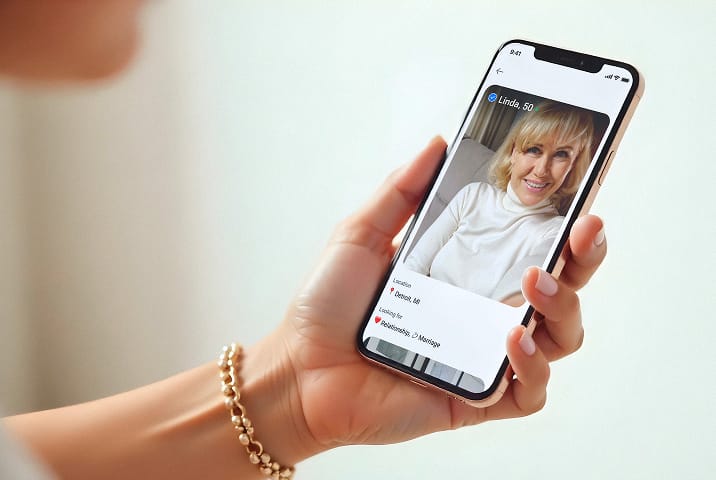
Most dating platforms are built around volume. The design encourages fast decisions, so you swipe, match, and move on. That structure gives more value to photos than words and more worth to quantity than depth.
Sequel is built on a different premise: it's a dating app designed specifically for adults over 50, and the entire experience is oriented toward genuine conversation and connection. This is why we give tips on how to write a dating profile on the platform in a meaningful way.
Every Sequel member selects a relationship intention upfront, whether it's wanting to get married in the long run or just to spend quality time together as companions. That single step means your profile is seen by people who already want roughly what you want.
Profiles on Sequel also include prompts to share the specific personal details that create genuine points of connection.
Every profile passes dual-layer verification: AI-assisted scanning for synthetic content, followed by human review. So the person reading your profile is real, and the profile they're reading about you carries that same credibility.
Creating a dating profile on a platform designed for intentional connection means your words do more work. Put real thought into them.